|
|
||||
|
By Jo Nova It’s still a cultThe Queensland Environment Minister once made the mistake of saying he was “still to be convinced” of the degree to which humans are influencing climate change. Now, 13 years later, he’s had to backtrack in public for the crime of ever having doubts about the climate-bible. The ABC accidentally sums up the real reason: “It comes as Mr Powell works with Federal Environment Minister Murray Watt to prevent UNESCO from listing the Great Barrier Reef as “in danger”.” So it’s just extortion then? The UN threatens to slap a naughty sticker on their management of the Great Barrier Reef, which would scare off the tourists, and the Ministers have to pander to please the UN? (Nevermind that “in danger” rating would be absurd given the coral cover is still close to a record high.) This is not about Mr Powell, so much as a message to every other MP to toe the UN line. The Science is The Science?Queensland environment minister concedes humans are influencing climate changeBy Jessica van Vonderen, ABC Agitprop Unit* Queensland’s environment minister has stepped back his previously-stated scepticism over human-induced climate change, saying he is confident the science is correct. In 2012, as the newly minted environment minister under Campbell Newman, Andrew Powell said he was “still to be convinced” of the degree to which humans are influencing climate change. “It’s interesting that comment [in 2012] was taken the way it was,” Mr Powell said. “I very much believe in climate change and am confident the science is right. “My position has always been that the science is the science.” Does the ABC realize that this radiates like a religious obsession? If there was overwhelming evidence of man-made climate change, they wouldn’t need to doggedly enforce the permitted litany. They’d just answer his question. Peter Ridd, Reef Rebels
*The ABC calls this “News”.  Image by Vilius Kukanauskas from Pixabay By Jo Nova It’s like we live in a movie — everything around us is fake.Everyone knows Australia won’t meet the fantasy 2030 target of a 43% reduction in carbon emissions, so there’s a flying-pop-tarts chance of us reaching an even higher one by 2035. Renewables investment is down 65%, farmers hate the transmission lines, offshore wind has stalled, and green hydrogen has collapsed, and yet the Labor Government is about to take the impossible and double it up. They are singing a reduction tune supposedly between 65 to 75%. Ludicrous, either way. To make matters more absurd, not only will it not change the temperature in any measurable way, but the Australian people don’t want a higher target, and the Labor Party know that. If they thought it had any appeal, they would have sung hallelujah about the new target before the election, but they delayed it instead because they knew the voters would hate it. Added to that, none of the Labor or Green politicians even seem to believe the scare themselves. It they did, they would have campaigned for nuclear plants 15 years ago, to save the world. Instead, NASA will get a nuclear plant on the moon before we build one in Australia. But we all “love The Science”, right? If hypothetically, this whole charade was being fuel-injected from a foreign country trying to sabotage Australia, it might look like this. The Government has never told us what the magic fairy cake of Net Zero will costIt’s like buying a house and you don’t know the price. For some reason the Business Council of Australia (BCA) is adding up what the Treasury can’t or won’t — and they calculate that a target of 70% by 2035 would *only* cost $530 billion dollars. This bargain deal, ladies and gentlemen, is just $18,000 a person, or nearly $80,000 from a family of four. Perhaps you’d like to vote on that? Nevermind. The Business Council members include at least five banks, three tech giants, Google, Microsoft, and Meta, and many universities. All in all, the BCA is a walking-talking lobbying team for any Blob Subsidy Train. The universities dine on the grants, and the bankers have sunk “investment” in renewables, or they want to curry favor with the Chinese Communist Party, who want Australia to buy their surplus of solar panels, and wind turbines, and EVs. But even the Business Council argues that a 70% target will cost us $200b in lost investments. Rejoice, there is a tiny bit of sense there. In an ideal world (for them) the BCA wants a moderately big target, but they don’t want a target so high it breaks the country. They also want the “certainty” of the target being legislated. They need the guaranteed gravy train. This report is totally self-serving. Business issues $530bn warning to Labor on 2035 emissions targetBy Geoff Chambers, The Australian Anthony Albanese and Chris Bowen have been warned by Australia’s largest employers that cutting emissions by 70 per cent or more would carry a price tag of up to $530bn in capital investment, as business leaders refuse to provide cover for Labor’s higher climate targets. Ahead of the Prime Minister and the Climate Change and Energy Minister unveiling a 2035 emissions-reduction target in the next fortnight, a Business Council of Australia report reveals the government is facing extreme financial, workforce and delivery pressures to land the net-zero transition And thus it comes to pass that a group of business traders tells us we’ll all be $10,000 richer if we buy their scheme to stop storms. Road to Net ZeroJudith Sloan, The AustralianBut here’s the thing: notwithstanding the high probability the 2030 target won’t be met – and let’s not forget that this target is legislated – both climate activists and self-interested businesses are campaigning for a ridiculously high target for 2035, of 75 per cent relative to 2005. While this target may seem absurd, fervent beliefs can be a powerful force, even if these beliefs are essentially baseless. The report, produced by Deloitte Access Economics, reaches the extraordinary conclusion that a 75 per cent target would add $370bn to GDP by 2035, which in per capita terms is $10,000. In addition, there would then be an additional 69,000 jobs – trivial given the number of employed is almost 15 million. We are also told that export revenues would increase by $190bn by 2050 in total, which is a rounding error. Iron ore, coal and LNG today generate almost $250bn in export income annually. And everyone keeps a straight face. And no one says “Before we spend half a trillion dollars, shouldn’t we at least check the science?”
By Jo NovaAntarctica defies the expertsTwo studies out this year suggest that something shifted in Antarctica recently and no one knows what it was. In 2016 Antarctic Sea Ice surrounding the continent mysteriously started to disappear. At the same time more snow started accumulating on the main Antarctic ice-sheet (Fig 2b). The GRACE satellite, measures the total surface mass — with all the gains as well as the losses — and suggests after 20 years of decline the steadily falling trend has broken. What matters most in this story is that the climate models didn’t see this change coming, and therefore are missing at least one big crucial factor, or maybe ten. Who knows? Antarctica was supposed to suffer polar amplification, and heat twice as fast as the rest of the world. What happened to that?  Wang, Wei, et al 2025. Mass Changes from the AIS from 2002 – 2023. The grey shadow shows the gap between GRACE and GRACE-FO. The Climate Blob quickly issued a Fact Check, because it was fueling “climate denial” which is like Ebola or something, and must be stopped immediately. So the scientists who didn’t predict any of these shifts in Antarctica, now tell us it is only temporary “due to the weather”. Presumably their climate models have finally started working, at least until the next time they turn out to be wrong. A second paper by a different Wang (S) et al, also used the GRACE satellite (NASA’s Gravity Recovery And Climate Experiment). According to the paper, the Antarctic Ice Sheet was melting and adding 0.2-0.4mm each year to global sea levels. But after 2020 it has been reducing global sea levels by 0.3mm a year instead.  Timeseries of monthly Antarctic mass variation in Gt since April 2002, based on the Gravity Recovery and Climate Experiment (GRACE) data, with the period from July 2020 to June 2023 highlighted. b Timeseries of the cumulative surface mass balance (SMB) anomaly relative to April 2002, with the period from July 2020 to June 2023 highlighted Wang S et al It is, of course, “not an indication that global warming has reversed”, because nothing can show that. It is forbidden. The bafflement in the headline says it all: NASA satellites show Antarctica has gained ice despite rising global temperatures. How is that possible?LiveScience News By Patrick Pester published May 14, 2025 An abrupt change in Antarctica has caused the continent to gain ice. But this increase, documented in NASA satellite data, is a temporary anomaly rather than an indication that global warming has reversed, scientists say. It’s always just weather: Most of the gains have already been attributed to an anomaly that saw increased precipitation (snow and some rain) fall over Antarctica, which caused more ice to form. Antarctica’s ice levels fluctuate from year to year, and the gains appear to have slowed since the study period ended at the beginning of 2024. The levels reported by NASA thus far in 2025 look similar to what they were back in 2020, just before the abrupt gain. Just because they didn’t predict this, that doesn’t make it strange, say the experts. There is always some factor a climate scientist can mention like a prophet, to explain why the climate surprised them, but they knew it would happen. It fools most journalists. “This isn’t particularly strange,” said Tom Slater, a research fellow in environmental science at Northumbria University in the U.K. who wasn’t involved in the study. “In a warmer climate the atmosphere can hold more moisture — this raises the likelihood of extreme weather such as the heavy snowfall which caused the recent mass gain in East Antarctica,” he told Live Science in an email. Obviously a warmer world has more water vapor in the atmosphere. But they don’t mention this when droughts happen, or bushfires rage, do they? Hmm. The biggest losses of ice from Antarctica are near those 91 volcanoes we discovered a few years ago.
 Nature Fig 2. Antarctic Map Professor John Smellie.
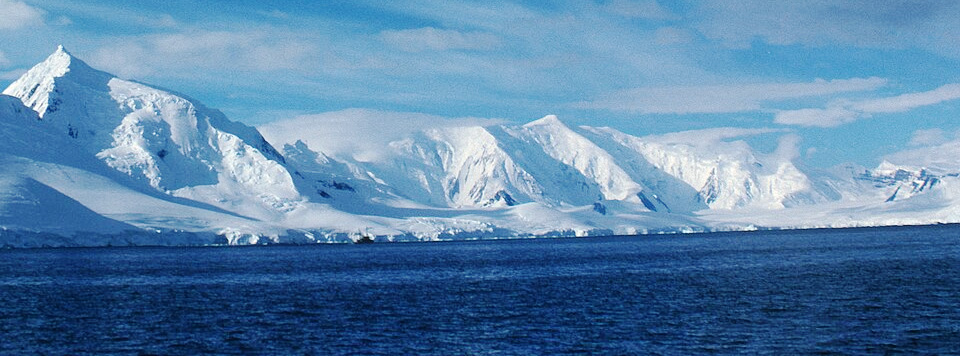
h/t David Archibald REFERENCESWang, S., Liu, J., Cai, W. et al. Strong impact of the rare three-year La Niña event on Antarctic surface climate changes in 2021–2023. npj Clim Atmos Sci 8, 173 (2025). https://doi.org/10.1038/s41612-025-01066-0 Wang, W., Shen, Y., Chen, Q. et al. Spatiotemporal mass change rate analysis from 2002 to 2023 over the Antarctic Ice Sheet and four glacier basins in Wilkes-Queen Mary Land. Sci. China Earth Sci. 68, 1086–1099 (2025). https://doi.org/10.1007/s11430-024-1517-1 Antarctic Photo: Robert L Dale
September 4th, 2025 | Tags: Antarctica, Climate Models | Category: Cryosphere, Global Warming |  Print This Post | | Print This Post | |  Cromarty Firth, where old North Sea Oil platforms are dragged to rest until the price of oil rises again. | Photo by joiseyshowaa Cromarty Firth Oil Rigs By Jo Nova Finally, the UK conservative Party is offering fossil fuels with no apologyIt’s all good, but the UK Opposition left it so late to actually oppose The Blob, that Nigel Farage and Reform UK may wipe them out permanently. The latest polls have Reform romping ahead on 29-35%, leading the Labor government who can only get support from 18-24% of voters. The conservatives (who, let’s remember, were The Government a bit over a year ago) have slumped to 15-20%. Now that Nigel Farage has made it obvious what voters want, the Tories have finally been dragged into offering it too. But true leaders are the people that do it first. We hope Sussan Ley, Australia’s opposition leader, is paying attention. In March The Tories dumped the impossible NetZero plan. Now they say that if they are (ever) elected again, they will “maximize extraction” of North Sea oil and gas, which sounds like the British way of saying “Drill Baby Drill”. Tories pledge to get all oil and gas out of North SeaBBCKemi Badenoch has said her party will remove all net zero requirements on oil and gas companies drilling in the North Sea if elected. The Conservative leader is to formally announce the plan to focus solely on “maximising extraction” to get “all our oil and gas out of the North Sea” in a speech in Aberdeen on Tuesday, She will claim that net zero measures mean households end up “paying the price through higher energy bills”. Only a couple of years ago this would have caused apoplexy writ large: Kemi Badenoch pledges to make oil and gas ‘cornerstone’ of UK economyThe Independent A Tory government would make North Sea oil and gas the “cornerstone” of the economy, Kemi Badenoch will pledge, as she hit out at Labour for treating the sector as a “relic of the past”. The Conservative leader, who said she wants to see as much oil and gas extracted from the UK Continental Shelf as possible, will insist that it is only her party that is “backing Britain’s North Sea industry”. Her comments came as David Whitehouse, chief executive of the industry body Offshore Energies UK, said there was “an important message that the UK should produce its own oil and gas”. He said that estimates suggest the UK will need between 10 billion and 15 billion barrels of oil and gas between now and 2050 – the target date for the country to reach net zero. But Mr Whitehouse added the UK was currently on course to produce less than four billion barrels from the North Sea. Only a month ago, the New Zealand government finally voted to undo Jacinda Arderns rules and resume oil and gas exploration. New Zealand government votes to bring back fossil fuel exploration in major reversalThe Guardian New Zealand’s government has voted to resume oil and gas exploration despite an outcry from the opposition and environmental groups who argue the reversal will lay waste to the country’s climate credentials. The climate agenda is falling apart all over the world:““No doubt growing public scepticism is what has fuelled Kemi Badenoch’s plans to ‘drill, baby, drill’. The burden of Net Zero is now impossible to ignore. Households and industries have reached breaking point. A deep well of anger has effectively forced Badenoch’s hand,” says @FraserMyers. “For years, voters were treated as mere bystanders while stringent Net Zero policies were agreed on above their heads. That is now over. The revolt against the climate consensus is just getting started.”” — @NetZeroWatch
September 3rd, 2025 | Tags: Big-Oil, Gas | Category: Fossil Fuels, Global Warming, UK | Print This Post | |
By Jo Nova Rich nations protect the EarthDespite the UN blaming the rich nations for destroying the planet, the data shows that wealthy nations have cleaner air and water and less deforestation. A team at Yale compile a score called the Environmental Performance Indicator. It tracks 58 factors like biodiversity, species protection, particulates in air, pollution in water, forest integrity and fish stocks. It also, sadly, considers “climate change mitigation” measures — which no doubt adds some pointless noise to the line. But the underlying trend is clear. The only countries in the highest ranks of Environmental Performance are the ones with a GDP per capita higher than $30,000 US. Possibly the best thing we could do for the environment is help poor nations grow their own economy. And the stupidest thing we could do is push unreliable energy onto the third world and deprive them of coal plants “for the sake of the environment”.
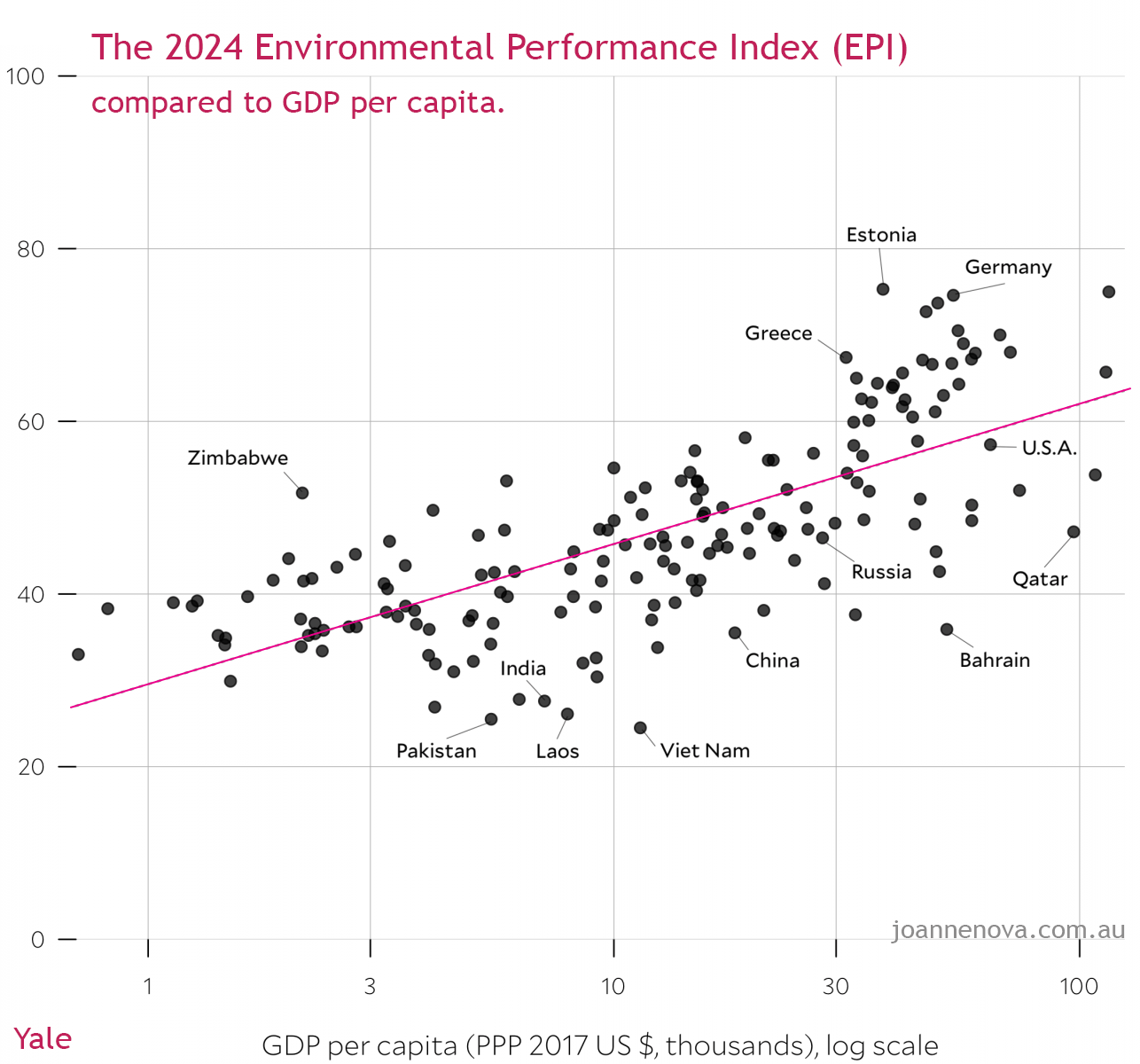 https://epi.yale.edu/ Obviously, anyone can raze a forest, and throw rubbish in the river, but it costs money to protect trees and plants, clean up waste, and filter factory chimneys. People who are hungry understandably, don’t care much about setting up national parks. The Yale dataset itself, is updated every year. This article, discussed below, came out in 2021: Study Finds Economic Prosperity is Associated With a Cleaner EnvironmentBy Ethan Yang, Human Progress The study finds that higher levels of income per capita are associated with lower levels of air pollution and deforestation. The Environmental Performance Index The Environmental Performance Index (EPI) is a joint project of the Yale Center for Environmental Policy and Law and the Center for International Earth Science Information Network at Columbia University. The index has been a leading resource on accessing environmental protection in individual countries for over 20 years. The latest 2020 edition ranks 180 countries based on metrics, such as air quality, ecosystem vitality, environmental health, drinking water, CO2 emissions, etc. However, what stands out about the 2020 edition is its conclusion: Good policy results are associated with wealth (GDP per capita), meaning that economic prosperity makes it possible for nations to invest in policies and programs that lead to desirable outcomes. This trend is especially true for issue categories under the umbrella of environmental health, as building the necessary infrastructure to provide clean drinking water and sanitation, reduce ambient air pollution, control hazardous waste, and respond to public health crises yields large returns for human well-being. For some reason Yale researchers even admit free speech and private property rights help the environment. Perhaps priorities become clear when people look closely at environmental stewardship in Zimbabwe? Furthermore, the report notes that although urbanization and industrialization can lead to increased pollution (especially in developing countries), tradeoffs between environmental protection and economic growth can be greatly mitigated by sound policy. For example, “commitment to the rule of law, a vibrant press, and even-handed enforcement of regulations – have strong relationships with top-tier EPI scores.” That’s because open governments allow for greater public scrutiny, whereas dictatorial governments, like the former Soviet Union, can silence their critics and continue destroying the environment unimpeded. Undermining of private property rights, for example, can incentivize poor ecological stewardship – as it did most recently in Zimbabwe and Venezuela. Economic growth is painted as a bad, bad bogeyman. Growth is supposedly synonymous with greed, and yet wealth saves the day. Giving up wealth to protect the environment is not the trade-off they want us to think it is. But it might be the excuse for keeping people poorer. REFERENCESBlock, S., Emerson, J. W., Esty, D. C., de Sherbinin, A., Wendling, Z. A., et al. (2024). 2024 Environmental Performance Index. New Haven, CT: Yale Center for Environmental Law & Policy. epi.yale.edu Graph by the Yale Center for Environmental Law & Policy – CC BY 4.0, https://commons.wikimedia.org/w/index.php?curid=154237043 Thanks to Peter Ridd for asking the right question.
September 2nd, 2025 | Tags: Biodiversity, Economics, Extinction, GDP | Category: Economics | Print This Post | | For those who wonder if there is any point in protesting against mass immigration or who’ve heard rumors there will be racist attacks. Ponder that is exactly what The Blob want you to think. Read the comment thread on Facebook in response to this –– it’s all good: “My Malaysian friends are coming.””..ALL Proud Aussies Welcome Renèe Meggs “We want politicians to see that every Australian, no matter their culture or skin colour, stands together and wants a better Australia than what we have now. We are calling for a pause in immigration until families are no longer forced to live on the streets or in cars, and until safety is restored to our communities. If you love this country as much as we do, come march with us. Stand with us. Together, we are stronger — and together, we will be heard.” According to Mike Benz, who used to work at the US State Department, The Blob thinks protests are such a useful part of Political Statecraft, they have teams dedicated to feeding the protests that suit them. Then they leverage that to change policies and even tip weak governments over the edge. Meanwhile the hardworking majority sit at home and talk about how the country is going to pieces — because they don’t realize how important it is to stand up and be counted. Don’t let The Blob set the agenda. If all voters took a few hours a year to get involved, it would suddenly be obvious to everyone what issues matter. As a bonus, you meet great people. And when there is enough people, it’s electric. That’s what the Blob is most afraid of. Check the March for Australia site and Facebook to find out your local details. UPDATED: From the Perth protest today. Look how deep that crowd is and how big those flags are. The Perth March was hugeThe ABC estimate of “more than a thousand people” with “dozens of flags” is ridiculous. Everyone was friendly and well behaved, ordinary Australians and quite a few Vets, or children of veterans. These were the brave people who knew the Nazi racist propaganda message was just the empty name-calling of The Blob. A lot of the flags were 3m giants, so they look small in the distance, but that’s because they are a long way away.
Walking on the bridge over the freeway the cars below were honking in support.
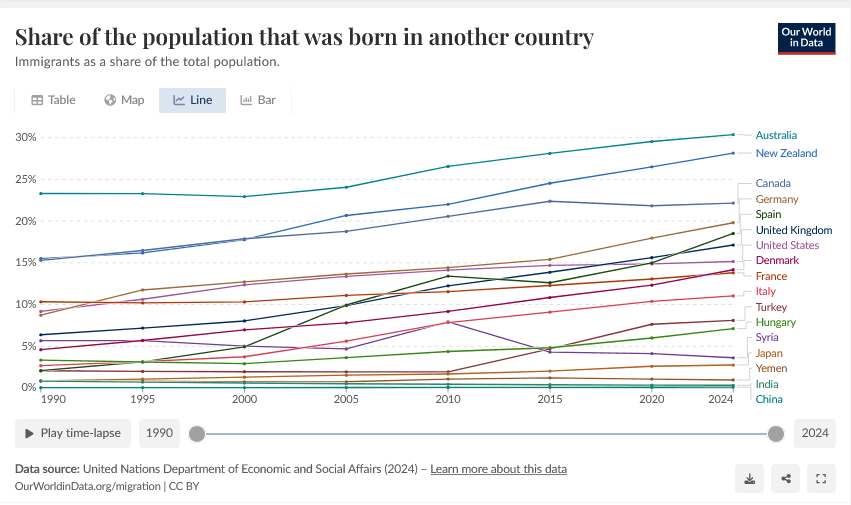
This Sunday at lunchtime Australians will March in every capital city for AustraliaIt’s just another unmentionable topic. Most people don’t know that despite a moat filled with crocodiles, Australia has the highest rate of immigration in the Western World. Fully 31% of people living here today were born overseas. (And 28% in New Zealand). This is higher than the US (15%), the UK (17%), Canada (22%) and Europe (13%). Who will we invite into our house to live?It seems like a fundamental question of any civilization. Yet we’ve never voted for mass immigration, and never discussed it. No one in charge, it seems, has even asked “do we have enough rooms” before they gave out the house keys. But the Blob got more jobs, more voters, and the price of their houses goes up as more people compete to buy the same number of homes. The Workers though, their wages stay low, rents increase, taxes grow, and their children can’t afford to buy a granny flat, or get married and have their own kids. Maybe that matters? For some reason, even though we are the global Multicultural Star, and everyone is happy, The Blob doesn’t want Australians to talk about this. Indeed they are so afraid Australians might find out the real numbers, the Australian Bureau of Statistics has even written to people to say they are misleading the public by quoting their own ABS monthly net permanent migration figures. (Thus, I feel I really have to share them.) “Last week, the Australian Bureau of Statistics (ABS) reported the strongest net permanent and long-term arrivals over the first six months of any year on record. In the first half of 2025, a record 279,460 net permanent and long-term arrivals landed in Australia, up 13,080 (5%) from the 266,380 net arrivals that landed last year and 108,890 (64%) higher than the same period in 2019, before the pandemic.” For some reason the ABS helpfully points out that other countries have higher foreign born factions — like Saudi Arabia, the UAE, Jordan and Kuwait. They don’t mention that the Gulf States have temporary laborers who cannot settle or bring families, get citizenship, or in the case of Jordan that they are wartime refugees. Australia has been quietly at the top of this game for a long time:If you want to help raise awareness to start that discussion and find out what Australians want, you can email friends, share on Facebook or print flyers to drop in letterboxes. The ABC probably won’t be promoting this. Check the March for Australia site to find out your local details.
 Top row: In a mouse model of Alzheimer’s disease, lithium deficiency (right) dramatically increased amyloid beta deposits in the brain compared with mice that had normal physiological levels of lithium (left). Bottom row: The same was true for the Alzheimer’s neurofibrillary tangle protein tau. Images: Yankner Lab By Jo Nova A bit of a blockbuster…Wow. A major new study this month suggests for the first time, finally, what might be a causal link between a deficiency in lithium and Alzheimer’s. The team at Harvard asks: Could Lithium Explain — and Treat — Alzheimer’s Disease?A few weeks ago, they released a big paper in Nature. They had analyzed brain tissue from people who had died, and found that lithium levels declined dramatically in people with mild cognitive decline, in other words, in the earliest stages, before Alzheimer’s was diagnosed. When they deprived mice of lithium, the mice showed accelerated brain pathology and their memory declined. But when they fed deprived mice lithium, they were able to restore their memory. It’s quite remarkable. There is hope. We’ve known for years lithium might be essentialFor a century or more there have been hints that lithium is an essential element for our health, and especially for our brains. In 1949 an Australian, John Cade, discovered he could treat people with bipolar disorder with lithium. By 1990 researchers knew that low levels of lithium in drinking water were associated with higher levels of suicide suggesting that lithium might be essential for a healthy brain. Studies in the 1970s and 1980s showed rats and goats had higher mortality rates if they were deprived of lithium. In 2011, researchers showed that in area of Japan with higher levels of lithium in the water, people actually lived longer. In 2017 a group in Texas found that in counties with higher lithium levels, people died less often of Alzheimer’s. In 2018 lithium was shown to enhance the clearance of amyloid-β (Aβ) which is commonly found in people with Alzheimer’s. And yet, there is no RDA for lithium. Like so many things that can’t be patented and sold for profit, our government agencies are slow to get interested in cheap treatments. Imagine if the cure was cents a day instead of $56,000 a year? (Big Pharma will hate it). But long ago, in the 1860s there was a health craze to bathe and drink bottled water from lithium enriched springs, which maybe wasn’t so crazy. Lithium deficiency looks like a cause of the build-up of the infamous amyloid plaques?Their research fills a big gap — we know amyloid plaques are associated with Alzheimer’s, but they are not definitive. There are people with high levels of amyloid who don’t suffer memory loss, and people who do have cognitive decline who don’t seem to have much in the way of plaques. And we’ve spent twenty years, and billions of dollars, trying to treat dementia by reducing the plaques, yet been unable to show any improvement in cognitive abilities. This study is the first to show that amyloid plaques seem to sequester lithium. In effect, the lithium concentrates in the plaques, but this starves the rest of the brain, and we now know lithium protects brains in several ways. So the real issue appears to be the lack of lithium, not so much the plaques. The researchers looked at brain tissue from people who were cognitively healthy when they died and compared it to people with mild cognitive impairment (MCI) and people with Alzheimer’s disease (AD). They compared levels of 20 different micronutrients and minerals across the three types of tissue and the one that stood out was lithium. Levels fell in the cortex of people with mild cognitive impairment before they developed Alzheimer’s, See the graph below, by crikey. It’s rare the medical world to see such a stark difference. The graphs show that lithium, and only lithium is declining in brain tissue compared to blood in people with some form of cognitive impairment. (NCI means no cognitive impairment).  Figure 1: a,b, Volcano plots showing changes in metal cortex-to-serum ratios in the PFC of MCI versus NCI (a) and AD versus NCI (b) cases, along with their statistical significance, determined by one-way analysis of variance (ANOVA) with Tukey’s post-hoc test, followed by the Benjamini–Hochberg correction for the number of metals assessed. (Aron et al 2025: ) Lithium stands alone. No other mineral showed such a dramatic decline in the cortex in association with cognitive impairment. They looked at half the periodic table (nearly) including sodium, potassium, calcium, magnesium, phosphorus, iron, copper, zinc, manganese, cobalt, nickel, chromium, molybdenum, lead, aluminum, cadmium, arsenic, mercury, lithium, strontium, barium, rubidium, boron, and selenium. There is talk of lithium being used as an early indicator now, used as a way to diagnose (and hopefully prevent) dementia. Though blood levels of lithium are not that useful — it’s the amount in the brain that matters — which is hard to test. (Who wants a brain biopsy?) If lithium really is the key to Alzheimer’s, or even just one of the main causes, it could explain why some people with no plaques could still suffer memory loss if they were deprived of lithium some other way. Likewise, people with plaques who had a high intake of lithium, could perhaps keep their abilities intact. More studies need to be done to find out. The paradox is that lithium is concentrated in amyloid plaques, and yet getting more lithium into the brain might be the solution, both to overcome the deficiency, and prevent more plaques forming. The irony is that a lithium deficiency may increase the rate of the plaque formation, but the plaques then hoard the lithium. It’s a nasty spiral.  In Alzheimers, lithium was concentrated in the amyloid plaques. Lithium acts in several ways that protect the brainWhat impresses me is that there are now so many mechanisms. This is not just another study of some loose correlation or association. Lithium inhibits an enzyme called GSK3β — which is normally elevated in Alzheimer’s. GSK3β is involved in building both plaques and tau tangles, so it’s a good thing that lithium puts a brake on this process. When lithium is low, genes involved in synaptic signaling and structure were broadly down-regulated, and lithium-deficient mice had thinner myelin sheaths around neuronal axons, which can’t be good. (Myelin is like insulation for our nerves). Many of the genes that were up-regulated were risky genes that are also up-regulated in Alzheimer’s. How much lithium do we need?Dr Bruce Yanker (the lead researcher at Harvard) obviously tells people we need more studies before he could recommend anyone take lithium. For those who don’t want to wait another ten years, or who are at risk now, it might be prudent to look up the lithium levels in your water and food (which is easy in the US where most wells have been assayed, but harder in Australia, though I found one map). People who are concerned can take a small over-the-counter supplement to make sure they are not deprived. It seems safe to take doses of lithium that are at the same low level that some people naturally get from food and water. Lithium is found in leafy greens, legumes, eggs, potatoes and milk but at very low levels, especially in areas where the soil doesn’t have much lithium. Some forms of mineral water have higher levels of lithium too. Or you could move to Portugal or Argentina. The natural intake of lithium is between 0.5mg to 1mg per day, but in some parts of the world it reaches up to 5mg a day. Doses used to treat bipolar disorder are vastly higher — as much as 100 to 200mg a day of elemental lithium for years on end. This is via a prescription for something like 1,000mg of lithium carbonate. There are sometimes side effects at these high doses that need monitoring (talk to your doctor, etc). The form of lithium that seemed most useful in this study was Lithium Orotate which is available over the counter in many countries, or at least by mail order from Australia. Lithium is a favourite of mine, and I’ll be writing more soon. I might start a campaign. h/t to Michael Rae (20 years ago) and hello to Maurice and Charles who share an interest. Related posts: One in six dementia cases might be avoided with Vitamin D ABBREVIATIONS
REFERENCESAron, L., Ngian, Z.K., Qiu, C. et al. Lithium deficiency and the onset of Alzheimer’s disease. Nature (2025). https://doi.org/10.1038/s41586-025-09335-x Ohgami, H, Terao, T, Shiotsuki, I, Ishii, N, Iwata, N. Lithium levels in drinking water and risk of suicide. Br J Psychiatry 2009; 194: 464–5. Schrauzer, GN, Shrestha, KP. Lithium in drinking water and the incidences of crimes, suicides, and arrests related to drug addictions. Biol Trace El Res 1990; 25: 105–13. August 28th, 2025 | Tags: Alzheimers, Cognition, Dementia, Health, Lithium, Mental Health | Category: Diet, Health, Vitamins | Print This Post | |
By Jo Nova Another propaganda poll asks loaded cost-free fantasy-questions to maximize fake “support” for higher emissions targets.The Resolve Political Monitor always lets the hapless pollee know what they are supposed to say. Look at the way they frame it — the pollsters are supposed to be trying to figure out what kind of Net Zero targets Australians want, but they’re not framing it in terms of science, or what other countries are doing, or whether it worth spending $1.5 trillion to cool the world by 0.0 degrees. They frame the question by telling the voter that “both parties support a net zero target” but some in the Nationals would like to “ditch” it. Then they ask the crowd “what’s best for Australia”. Presumably they’re hoping to fool Australians into thinking that most people support Net Zero targets (“Both major parties support it”.) Yet, despite this effort to plant the consensus opinion in people’s minds, only 28% of Australians say the current target is the right one. Some 55% of Australia reject this or don’t know what to think. And only 17% of Australians want the Santa Claus option — the free, uncosted, “more ambitious” 2030 target. And we know when the IPA asked Australians how much they wanted to spend, only 7% were willing to even pay $10 a week or more. So the 17% figure would halve in an instant if the Resolve Political Monitor team asked an honest question about the cost.
In the most loaded push-polling question, The Resolve Political Monitor tells people that most experts think the target will be a 65 -75% reduction, and then asks people if they support or oppose this (do you, fool, know better than the experts?) Even under the weight of the “experts”, most Australians are not buying what they’re selling anymore and 56% were opposed or unsure. Australians have their say on new climate targets as Coalition prepares for another brawl on net zeroBy James Massola and Paul Sakkal, The Sydney Morning Herald The latest Resolve Political Monitor survey showed 44 per cent of voters supported the goal of reducing the nation’s carbon emissions by between 65 and 75 per cent by 2035…
The Sydney Morning Herald put their best spin on the story and said 44% support the new higher target, even when the other question the pollsters asked in the same survey directly contradicted this, suggesting only 17% actually wanted a higher target. What’s the mark of a junk survey — contradictory answers. The point of most political polls is not to find out what the voters want, it’s to tell the voters what to thinkThis loaded poll is there to set up Australians to think the Labor Government are raising the target because voters want them to do that. But even the Labor party knows this isn’t true. If they believed Australians wanted higher targets, they would have taken it to the election. Photo by Leo_Visions on Unsplash
August 27th, 2025 | Tags: Polls, Survey | Category: Australia, Global Warming, polls, Psy-Ops | Print This Post | | |
Jo appreciates your support to help her keep doing what she does. This blog is funded by donations. Thanks!
 Follow Jo's Tweets
   
 
|
|||
|
Copyright © 2026 JoNova - All Rights Reserved |
||||











.jpg)

Recent Comments