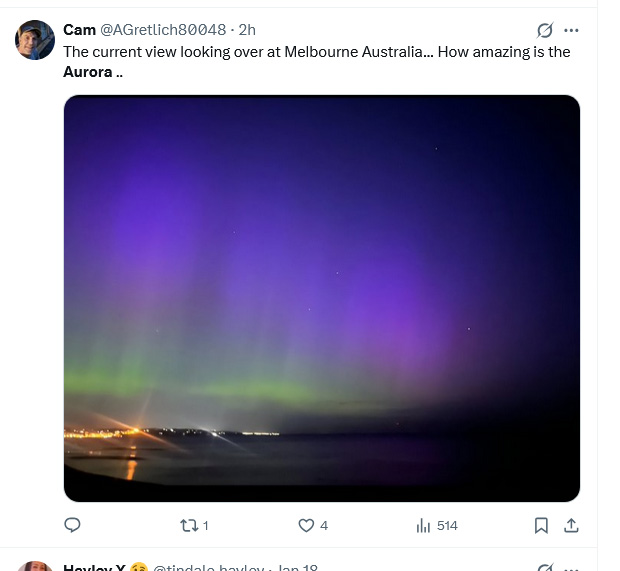
Aurora Watch Current due to the X1.9 flare that went off early Monday morning Australia time.
Glendale App reports the strongest ever substorm they have ever recorded hit Earth this morning 9am Eastern Australian time, sadly during daylight hours for us. Europeans got a roaring show, as are people in North America now. There may or may not be some action still running as darkness falls across Australia. It is cloudy in New Zealand, but they’ve probably seen too many auroras already… 🙂
How fast was this backflip? How big was this mistake…
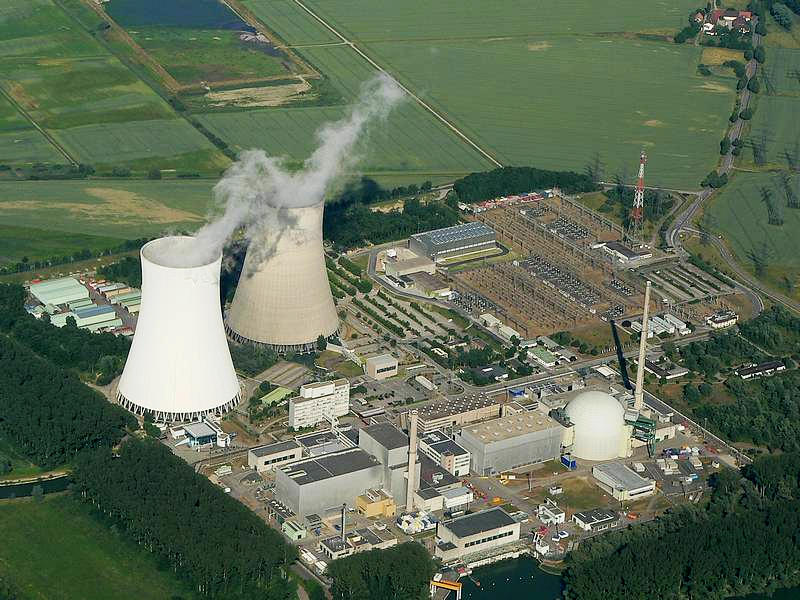
Germany shut down its last three reactors in April 2023, but three years later, they’ve realized it was a terrible mistake and want to rebuild them or put small modular reactors “likely on the same sites”.
After 66 years of operating nuclear power without any major accidents, the irony was that Germany shut down its nuclear industry mostly because other countries had accidents. But now they admit they need more electricity.
This would be one of the biggest backdowns in the fake renewables “transition”. Germany is the third largest economy in the world, and Chancellor Merz said this openly at a business conference a few days ago, but the mass media have said nothing.
The media groups that have reported it are niche outlets with names like Deseret News, TVPWorld, and American Thinker.
Translations from the video below:
Chancellor Merz “It was a serious strategic mistake to exit nuclear energy. We are now undertaking the most expensive energy transition in the entire world. I know of no other country that makes things so difficult for its own industry.”
“To have acceptable market prices for energy production again, we would have to permanently subsidise energy prices from the federal budget,” Merz said, adding: “We can’t do this in the long run.”
“If you are going to do it, you should at least have left the last remaining nuclear power plant in Germany on the grid three years ago, so that you at least have the electricity generation capacity that we had up until then,” he said.
Abdulvehab Ejup reports on TRT World — the Turkish Public Broadcaster.
Germany once had 19 nuclear power plants, which provided more than a quarter of its electricity, but now they are bleeding industrial power, losing solar, wind power, EVs and now AI before it has barely started:
Germany, meanwhile, is watching the digital economy and the jobs that come with it flow to nations with cheaper, more reliable electricity. And Berlin’s solution seems to be if you can’t beat them, join them. Merz has dropped German opposition to nuclear energy in EU law, opening the door for German companies to invest in French small modular reactor projects.
Don’t call these fossil fuel generators — they are baby hydrogen plants!
Facing industrial death, Germany has finally decided it needs dispatchable reliable electricity. But they can’t announce that they suddenly need to build 10 gigawatts of fossil fueled gas power plants. It would be like admitting the sacred Energiewende had been a ghastly mistake that wasted billions of dollars on a reckless vanity quest to change the clouds. So instead, these new “power plants” with a focus on “gas-fired sites” must be convertible to run on hydrogen by 2045. Of course, they may never run on hydrogen, given that makes pipes brittle, leaks, and costs four times as much as natural gas, but it makes a good cover story.
This is exactly what I would do if I wanted to hide a major backflip and pretend this was just a slight variation on the renewables theme. (Especially if I had no scruples).
Note that the Reuters Blob-Media story (below) does not mention the words “fossil fuels” or “dispatchable” it just talks about the need to generate electricity over “a longer period of time”.
The gas to hydrogen plant story is the PR cover and escape hatch from the Sacred Renewables Mission.
It’s just another marker of how fast the renewable energy plan is coming undone…
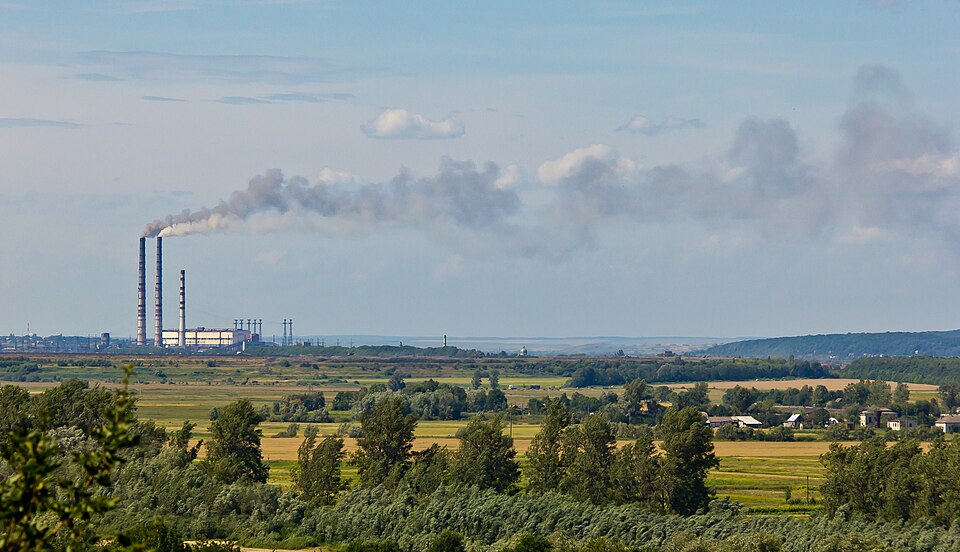
BERLIN/FRANKFURT, Jan 15 (Reuters) – Germany said on Thursday it had reached an agreement with the European Commission on a plan to build new power stations, adding it would tender 12 gigawatts (GW) worth of capacity in 2026, with a focus on gas-fired sites.
This is a major step on Germany’s path to ensure security of supply in light of the country’s ongoing phase-out of coal-fired power capacity. “With the short-term tenders … we are also laying the foundation for a secure electricity supply in Germany in the future and thus for the competitiveness of our industry,” Economy Minister Katherina Reiche said.
Most of the new capacity, 10 GW, must be able to generate electricity over a longer period of time to ensure steady supply, Germany’s economy ministry said, adding that this included but was not limited to gas-fired power stations.
Wow — 10 GW of new power by 2031!?
The new power stations, which are expected to enter service in 2031, will be able to run on hydrogen by 2045 at the latest, in line with Germany’s goal of becoming climate neutral that year, the ministry said.
Obviously, there are no apologies, no honesty, and they will never admit they were wrong.
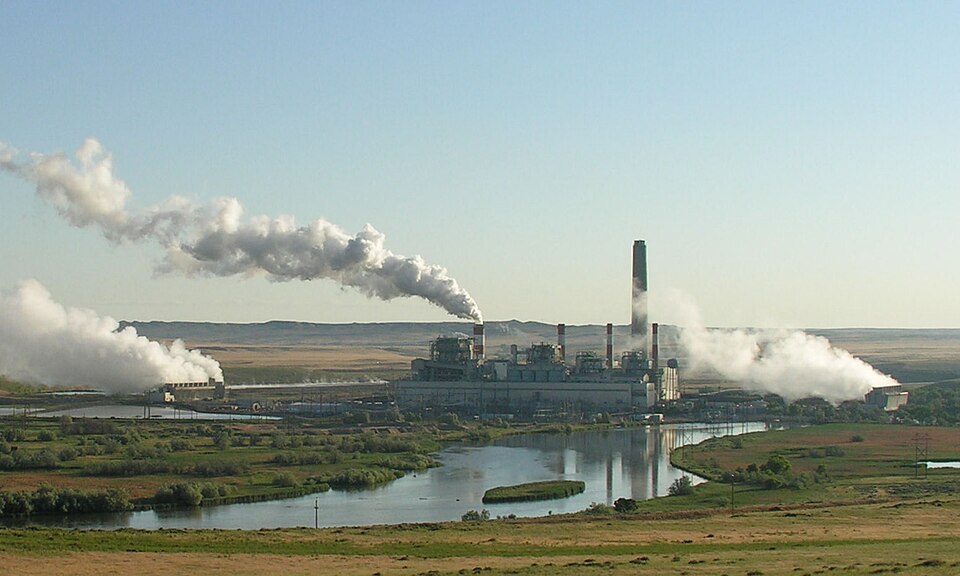
In December, President Donald Trump’s Department of Energy issued an emergency order demanding that Tri-State Generation’s Craig Unit 1 coal plant stay open past the long-planned Dec. 31 shuttering date. Tri-State is now fixing broken parts at the plant, which it had previously not planned to do given the closure, and will bring it back online. The co-op generator says it has not heard any plan on who will pay the up to $80 million annual cost of running the plant in 2026.
The EPA on Friday cited the Department of Energy’s emergency action in calling out Colorado. “These plants are vital to delivering reliable and affordable energy to Colorado families and meeting the surging national energy demand,” the EPA announcement said.
The Colorado governor was not happy. And nor were The Blob NGOs — one spokesman at Earthjustice’s Rocky Mountain Office accused Trump, of all things, of being ‘ideological’.
The pace of ’emergency coal rescues’ is quickening:
By November, Chris Wright, the US Secretary of Energy, had stepped in three times to keep coal plants running, but in December, the pace quickened. Wright not only saved the Colorado plant, but also ordered a coal plant in Washington, and two plants in Indiana to keep running.
Under federal law, the Energy Secretary has the authority when an emergency exists, including a shortage of electricity, to make temporary orders regarding electricity infrastructure to address the emergency.
On Dec. 17, Wright ordered the last coal power plant in Washington to remain operational. It was slated for retirement at the end of last month.
Joe Fassler at DeSmog had already tallied up 15 coal plants whose lives had been extended in the USA since Donald Trump was elected, though he admits this was also driven by AI, and data centre demand.
Trump made a promise to revive the US Coal industry and to End the War on Coal.
“Keeping this coal plant online will ensure Americans maintain an affordable, reliable, and secure supply of electricity. The Trump administration is committed to lowering energy costs and keeping American families safe,” Energy Secretary Chris Wright said in a statement.
If only the Australian government could say the same…
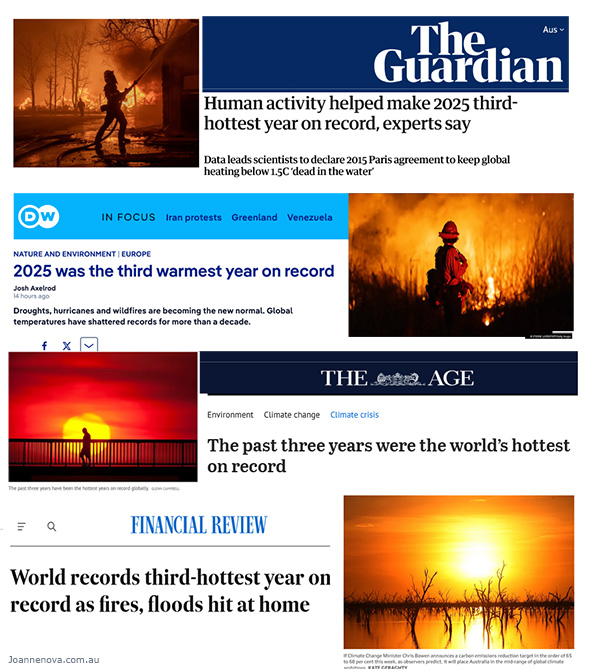
Last year, like every other year, was the hottest variation of something.
All the Blob Media reported the latest trivia in unison, with identikit headlines and matching Pantone Bright Red color.
2025 was the third warmest year on record
For some reason, despite their Pulitzer prizes, and daily acknowledgement of Dreamtime culture — none of the legacy media journalists remembered that prehistory even existed. It’s like 99% of the last 10,000 years never happened. The Stone-age, Iron-age, Egyptians, Sumerians, Greeks — all, Phht. Not one of the “journalists” asked any of these scientists whether it was misleading to focus on the last 150 years when we had thermometers, when it was hotter for thousands of years, and there was no coal plant in sight.
The media is all bread and circuses. It’s a performance art designed to distract us and stop us noticing things that matter. Like the heat in the Holocene, and like the giant volcano called Hunga Tonga. (More on that soon).
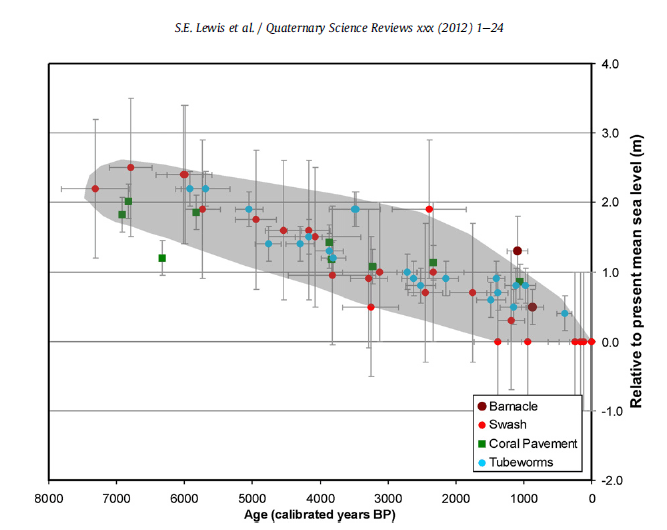
Sea level have been falling for 7,000 years in Western Australia — one of the most stable and ancient pieces of land in the world. (Lewis et al). How could the world be cooler than today and the seas be 2 meters deeper?
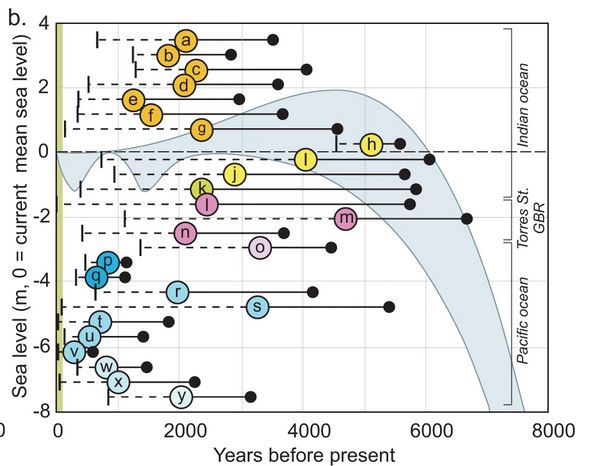
It’s the same all around the world. In Taiwan giant oysters lived 3 meters above the current waterline. In Africa along thousands of kilometers of the entire west coast sea levels have been falling as the world cooled for thousands of years. (Vacci et al).
Human civilization was born in the hot Holocene and yet somehow we and the corals survived just fine….
Tell the children they called it The Holocene Optimum.
REFERENCES
Lewis, S.E., et al., Post-glacial sea-level changes around the Australian margin: a review, Quaternary Science Reviews (2012), http://dx.doi.org/10.1016/j.quascirev.2012.09.006 [abstract] (paywalled).
Kench, P.S., Liang, C., Ford, M.R. et al. (2023) Reef islands have continually adjusted to environmental change over the past two millennia. Nat Commun14, 508 doi.org/10.1038/s41467-023-36171-2
Almost none of their sacred 30 year trends panned out, so they’re now inventing spooky new forecasts (right after they happen). Any old weather permutation, any random coincidence is fair game. So somewhere on a continent 5,000 kilometers across, there were floods and fires on the same day, and somewhere else, the weather changed from hot to cold. Yeah, verily, as Scorpio crosses through the House of ARC Grants, you will definitely get some weather…
Like unfalsifiable prophets of voodoo, we don’t know whether this exact same “whiplash weather” occurred 1,000 times before in the last 10,000 years, because there are no proxies for daily hot-n-cold flips or simultaneous fires and floods. There are no diatoms, or pollens or Beryllium isotopes that capture the flip. And there are no daily weather records from neolithic Australia.
Ergo — the smug curmudgeons of science can say whatever they feel like — knowing that no one can prove them wrong, and no journalist at the Sydney Morning Herald will ever ask them a hard question:
By Samantha Selinger-Morris, The Sydney Morning Herald
Bowman: We’re seeing this extraordinarily unstable climate … [what] we’re learning as we’re going is that the Earth system and the climate system is really very complicated.
When you start putting more energy into the atmosphere … the energy expresses itself in extraordinary ways. So we have, as we know, these extraordinary downpours and flooding events, we have these periods of just amazing rain.
We’re seeing this as well in California. So you get these very wet periods, you get flooding. You can get an interaction of the flooding with burnt areas. And then before you know it, you can switch back to drought … and then, to add insult to injury, we’ve been getting these incredible windstorms, and windstorms go with wind-driven fires, and wind-driven fires are just the worst because they move so quickly.
Rather than ask “how do you know this didn’t happen in 5,000 BC”, Ms Selinger-Morris asked the most leading and obvious question she could:
“How is climate change causing or driving this? You know, fires in one part of the country, floods in another. What’s happening here?”
Which was the cue for Mr Bowman to tell her how complex it all is again. (Like a sacred guild.) And to seed an excuse for when they screw up the next forecast. Astrologers always have a fallback plan:
Bowman: What’s happening is basically that the old weather patterns are breaking down … one of the reasons it’s going to become increasingly difficult to forecast weather is because we’re getting all of these complex interactions between sea surface temperatures.
…what we’re really describing is what’s being called in fire science “hydroclimatic whiplash”, this climate whiplash where we’re … going from wet to dry, wet to dry. So we’ve got this flickering between these states.
Melbourne was always supposed to have “four seasons in one day” — which is why Crowded House wrote a song about it 30 years ago before humankind emitted half our emissions. That sounds like pretty flickery weather.
Then, within our fire seasons, we’re seeing extreme heat waves, extreme wind events, and then you get the conjunction of an extreme heat wave and extreme wind event. We’ve just seen what happens. It’s just absolutely horrendous.
Horrendous indeed, but also handy — if they are wrong about the weather, remember, it’s because they were right about “climate change”. Excuses, excuses…
And that is a really important point … it’s not a criticism that this terrible fire season wasn’t adequately forecast … what we know from the past isn’t necessarily scaling well into the future.
So even though they sort of predicted this, and were right except when they were wrong, now the climate has changed, and they have to learn how to predict it again? So fossil fuels cause bad forecasts too?
Climate astrology might be the new normal, but climate science died a long time ago.
Green activists who sabotaged the Berlin grid last week may not have convinced anyone that carbon dioxide was a threat, but they have raised awareness that Germany needs more diesel generators, and thermal power plants.
On January 3rd, left wing extremists caused the longest blackout in Berlin since World War II leaving 100,000 people without heating or electricity for up to five days in midwinter. Suddenly local utilities have realized how vulnerable Germany is and are calling for a “national crisis reserve of mobile generators and heating systems.” And they want several hundred megawatts of it.
The association of local utilities (VKU) put out a press release calling for this new emergency reserve to be set up and spread around the country so it can restore power within 24 hours. They also for someone to clear away the bureaucratic red tape that slowed down the helpers, specifically mentioning the odd thing that must have delayed the response this time — like “responsibility, permits, liability, costs, labor rules and insurance.”
They paid homage to the “decentralized energy supply base on renewables” which could have (but didn’t) mitigate the damage. They probably had to write that. They also want to add in “grid meshing” or more interconnectors –presumably to make it harder for vandals to knock out one key line. But it will be “expensive” they say (isn’t it always). It’s just another bucket of money needed to be added to the renewables bills.
Germany’s municipal utilities are calling for a national crisis reserve of mobile generators and heating systems. These should be dispatched in an emergency to restore the electricity supply within 24 hours, argued industry lobby group VKU.
The VKU said the emergency reserve would enable the creation of temporary “island electricity grids” independent from the main supply system. These could be run by emergency power generators, which mostly run on diesel, combined heat and power plants, and gas turbines that could be activated with “a single phone call”. The association stated that this emergency reserve should have a combined capacity of several hundred megawatts.
In other lessons from Germany, Prof Vahrenholt points out that converting everyone on gas or petrol to electricity only makes a blackout so much worse and the nation more vulnerable.
Frontier Economics estimates the total cost of the energy transition until 2045 at an unaffordable 4,800 to 5,400 billion euros.
But now, the attack in Berlin demonstrates to us that such an energy system, based solely on electricity, is highly vulnerable. We are learning that when the power fails, the heat supply also fails—at least when it is supposed to be generated by heat pumps. And to make matters worse, we are learning that in freezing temperatures, heat pumps face total loss due to bursting pipes. This particular “warning label” was certainly not included in the “Habeck heating law,” which the CDU-SPD federal government intends to continue seamlessly. The content of the law will remain the same, but to ensure citizens don’t quite realize it, the name of the law is to be changed.
We are also learning that during a large-scale power outage, electric vehicles can only help if they happened to be charged before the “bang.” Otherwise, this utility also fails.
Home batteries and electric cars won’t be much use if the terrorists attack just before they get recharged.
ADDENDUM: Let’s not forget their manifesto for grid sabotage:
“In the greed for energy, the earth is being depleted, sucked dry, burned, ravaged, burned down, raped, destroyed,” the group, which is listed by Berlin’s intelligence services as a left-wing extremist organization, said in the letter.
“The aim of the action is to cause significant damage to the gas industry and the greed for energy,” its authors wrote. The group has used similar means to communicate in the past, and Berlin police believed the letter to be genuine.
Chris Wright, the United States Secretary of Energy, marvels that people can spend so much to achieve so little:
“Germany invested half a trillion dollars, more than doubled the capacity of its electricity grid — and today produces 20% less electricity than before that investment, selling it at three times the price.” — 13 min
“The lucky one billion — including everyone in this room — consumes about 13 barrels of oil per person per year. The other seven billion want to live like we do, but they consume about three barrels per person per year.”
It’s so nice to hear grownups talking:
Some extracts of his interview:
The tale of a remarkable transition from energy importer to energy exporter:
“Look at what’s happened in the United States. We’ve tripled liquids production in less than two decades. We are by far the world’s largest producer. We’ve more than doubled natural gas production, and it’s still growing fast.
This is phenomenal. Lower costs, lower prices — it has transformed the world. It’s hard to overstate the impact of the U.S. shale revolution and what all of you have done.
Total energy use in the US is still 72% oil and gas:
“One thing you never hear about: total primary energy consumption in the United States — over 72% now comes from just two energy sources: oil and natural gas. Record-high market share, in addition to record volumes. That doesn’t sound like a dying industry I’ve been hearing about for the last 15 years.
But when you roll over to the electricity sector, it’s a very different story.
In oil and gas production we’ve seen declining capital intensity, increasing efficiencies, and surging production. In electricity? Surging investment — gigantic amounts of money flowing in — and what’s the net result?
Almost no growth in electricity production, but significant growth in electricity prices.
The world isn’t going to copy the UK and Germany (or Australia):
“If you make electricity more expensive, and people don’t know where policy is heading, energy-intensive industry leaves your country. The United Kingdom and Germany are experts at that.
Germany invested half a trillion dollars, more than doubled the capacity of its electricity grid — and today produces 20% less electricity than before that investment, selling it at three times the price.
That is not a winning model. That is not what the world is going to duplicate.
We spend $10 trillion dollars to convert about 6% of global energy to solar and wind power:
Our industry is about physics, numbers, math — but when it comes to climate change, we check rationality at the door.
It’s only about decarbonizing and claiming we’re in the middle of an energy transition. I think we’re actually in the midst of the greatest malinvestment in human history.
Globally, about $10 trillion has been invested nominally in fighting climate change. What did we get for $10 trillion?
About 6% of global energy comes from these sources after $10 trillion of investment — and everywhere penetration is high, prices have gone up and industry has left.
If you close a factory in the Midlands and move it to Asia where it runs on coal, then ship the goods on diesel ships — that’s not fighting climate change. That’s de-industrializing your nation.
Oil, gas, and coal run the world. Full stop.
At the time of the Yom Kippur War, 85% of global energy came from hydrocarbons. That crisis launched the energy transition movement over 50 years ago.
Today? 85% hydrocarbons.
Let’s engage with reality. Oil, gas, and coal run the world. Full stop.
You can’t make a wind turbine, a solar panel, or a nuclear power plant without massive amounts of oil, gas, and coal. That’s how the world works.
The lucky one billion — including everyone in this room — consumes about 13 barrels of oil per person per year. The other seven billion want to live like we do, but they consume about three barrels per person per year…
Electricity should be getting cheaper:
For a century, electricity got cheaper and more reliable. We reversed that. Now it’s more expensive and less reliable.
If current trends continue, by 2030 blackouts could be 100 times more common.
Half the states have renewable portfolio standards. Those states have over 50% higher electricity prices than states without them.
If you do crazy things, you get bad results. See Germany. See the UK. See California.
Energy costs should be rising lower than inflation:
States with renewable portfolio standards have seen electricity prices increase at twice the rate of inflation. States that don’t have RPSs — unfortunately they also had increasing nominal electricity prices — but below the rate of inflation.
We should be seeing trends in electricity prices way below inflation.
The biggest source of electricity in the United States by far is natural gas. What has the price of natural gas done over the last 10 or 20 years? It’s plummeted. What has availability done? It’s surged.
More demand for electricity makes electricity cheaper
When people worry that AI demand will push up costs, Chris Wright points out that the US states that have grown their electricity output have also reduced their price of electricity. (Presumably this is because the states that depend on industry and manufacturing build serious generators instead of dancing around the renewable maypole.)
If you plot states that have grown their output of electricity — meaning re-industrialization or new demand — the faster the growth in demand for electricity, the lower the rise in price.
North Dakota is the champion: over 30% growth in electricity output, and electricity prices have actually declined. All the other states that have had flat or below-inflation price increases have had growing production of electricity.
And the champions on the other end — California, New York, Massachusetts, Maryland — that have had skyrocketing electricity prices: all of them produce less electricity today than they did five years ago.
There is something prosaic about ministerial titles in the USA. Chris Wright, is the Secretary of Energy and knows exactly what his primary task is, unlike the Australian Minister for Coal, Oil, Gas, Corals, Koalas and Weather Control.
We use cookies to ensure that we give you the best experience on our website. If you continue to use this site we will assume that you are happy with it.











Recent Comments